

By Aba, Ghanaian Nutritionist

London arrived in January. Grey sky, grey pavement, grey everything. I had moved from a place where the sun was not a seasonal guest but a daily given, where food was not something you planned around your schedule but something your schedule was planned around. Where eating was communal and warm and loud, and nobody counted anything.
Within a few months, I noticed something happening that I could not immediately name. I was not eating more than usual, at least not at meals. But late at night, when the flat was quiet and the radiator was clicking, I would find myself in the kitchen, not hungry; just eating biscuits, bread or whatever was there. Standing up, in the dark, eating food I did not particularly want.
This went on for a while before I sat down and actually thought about what was happening. I am a nutritionist. I work with people on their relationship with food every day. And I was stress eating in my kitchen at midnight and pretending it was not happening.
I want to talk about it, because I think a lot of Ghanaians who have moved to the UK know exactly what I am describing, even if they have never called it that.

It is not just the cold, though the cold is part of it. When sunlight drops, the brain produces less serotonin; the neurotransmitter most directly linked to mood stability and feelings of contentment. Less serotonin means the brain starts looking for other routes to the same feeling. Carbohydrates, particularly refined ones, trigger a short-term serotonin release. So the body is not being irrational when it craves bread and biscuits in winter. It is trying to self-medicate a very real neurochemical shift.
But the sunlight piece is only part of the picture. Moving to a new country involves a specific kind of stress that does not always look like stress from the outside. You might have a good job, a safe flat, people who care about you. And still feel profoundly displaced. Food, familiar food, Ghanaian food, becomes one of the few things that feels like home in a place that doesn’t yet feel like home.
So you eat it for comfort more than for nourishment. And when the familiar food is not available, you substitute. You eat whatever is there, quickly, in a way that has nothing to do with hunger and everything to do with trying to feel okay.
The stress eating pattern most Ghanaians in the UK experience is not a discipline problem. It is a displacement response. The body is doing what bodies do when they are out of their environment and under chronic low-grade stress.

When I finally looked at it, honestly, I realized the scale was not the issue. My weight had not significantly changed. But my body composition had shifted in a way I could feel a softness around my back and midsection that had not been there before, a loss of the muscle definition I had maintained at home.
This, I later understood, is a classic cortisol pattern. Chronic stress elevates cortisol, and chronically elevated cortisol promotes fat storage specifically around the abdomen and redistributes fat from other areas. The scale can stay the same while your body is quietly rearranging itself in response to a stress load it cannot resolve.
I was not gaining weight in the traditional sense. I was experiencing body composition changes driven by an HPA axis, the hormonal stress response system that had been running at a low hum for months without me fully acknowledging it.
Understanding that changed something. It was not about the biscuits. It was about the cortisol. The biscuits were a symptom.
It tends to follow a shape. The move arrives with energy and optimism. The first few months are busy enough that you do not notice the quiet. Then the busy settles and the quiet gets louder. You are doing everything right, working, building, adapting but something underneath is running on empty.
The eating changes slowly. You stop cooking proper Ghanaian meals because the ingredients are harder to find and you are tired and it is easier to buy something. You start eating at your desk. You eat quickly and alone and joylessly in a way that would be unrecognisable to the version of you that grew up eating surrounded by people and noise and food that someone had spent actual time making.
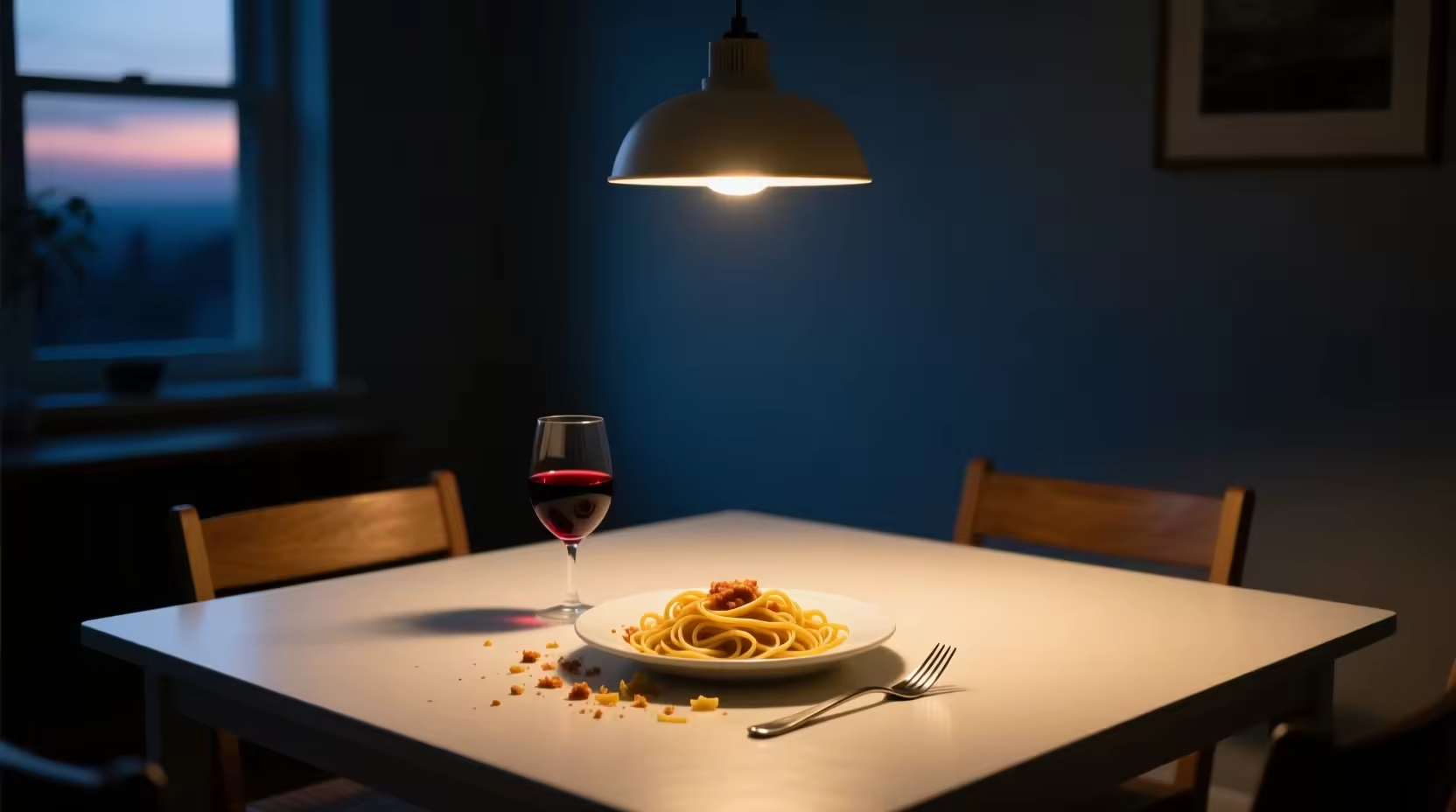
The late night eating kicks in. Not bingeing, nothing dramatic. Just a persistent, low-level pattern of eating when you are not hungry, eating things you would not normally choose, eating in response to the silence and the grey and the accumulated weight of being somewhere that does not yet fully know you.
And because nothing catastrophic is happening, you do not name it. You just live inside it.
The first thing I did was stop treating it as a food problem and start treating it as a stress problem. That reframe mattered. I was not trying to fix my eating. I was trying to address what was driving it.
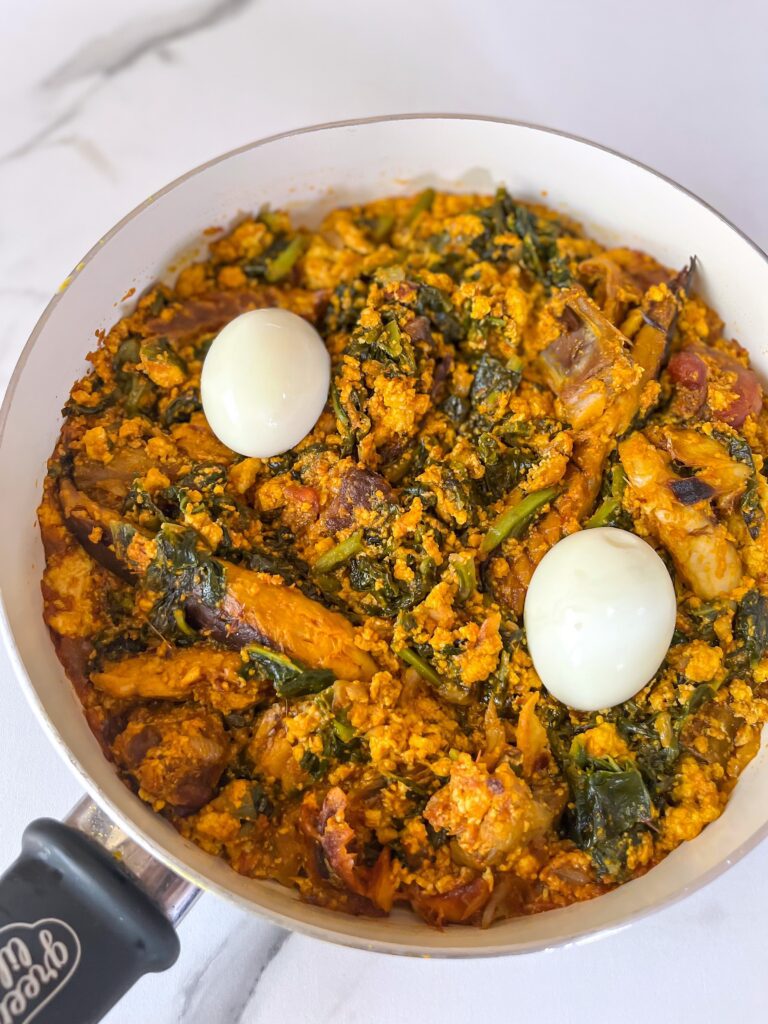
I started cooking again properly, and deliberately. Not every day, but regularly. Finding the African shops in my area, making the trip, cooking kontomire stew and light soup and jollof in portions that would last. The act of cooking familiar food was not just about nutrition. It was about re-establishing a connection to something that felt like home. It sounds small. It was not small.
I built structure back into my eating. Actual meals, at actual times, sitting down. This matters because structured eating reduces the neurological pull toward unplanned eating. When your brain knows food is coming at predictable intervals, the late night urgency diminishes.
I addressed the cortisol directly, not through meditation retreats or anything dramatic, but through sleep, through movement, through being honest with myself about what I needed socially and not pretending I was fine with isolation because London can make isolation feel like independence.
And I stopped making the food itself the problem. Fufu was not the issue. Jollof was not the issue. The issue was a stress response that I had been feeding with biscuits at midnight instead of addressing at the source.
The practical starting point is simpler than it might feel from inside the pattern.

Find your Ghanaian food sources and use them. The psychological value of eating familiar food, cooked properly, in a real meal rather than a grab-and-go situation, is not trivial. It is part of the work. [https://theweightgoals.com/ghanaian-ingredients-shopping-guide-uk-london/] Our shopping guide covers exactly where to find Ghanaian ingredients across London if you are still figuring that out.
Build your meals back into your day as real events. Breakfast before you leave. Lunch that is not eaten at a screen. Dinner that is not whatever is easiest at 10pm. Structure is not restriction. It is the scaffolding that makes unplanned eating unnecessary.
Take the cortisol seriously. If you are living under chronic low-grade stress, the relentless adaptation pressure of being an immigrant in a new country, no dietary change will fully resolve the pattern it is driving. Sleep, movement, community, and honest acknowledgement of what you are carrying are part of this too.
And if you want support building a nutrition approach that accounts for all of this, the food culture, the UK context, the stress picture that is exactly what our digital plans are built around. [https://theweightgoals.com/plans/] They are available worldwide, so wherever you are in the diaspora, the same support applies.
Bhatt, D. L., & Deedwania, P. (2024). Serotonin, sunlight exposure and seasonal appetite regulation. Journal of Clinical Endocrinology & Metabolism, 109(2), 45–58.
Maynard, M., Perlman, C. M., & Kirkpatrick, S. I. (2023). Acculturation, food insecurity and emotional eating among immigrants. Public Health Nutrition, 26(4), 812–826.
Incollingo Rodriguez, A. C. et al. (2023). Hypothalamic-pituitary-adrenal axis dysregulation and central adiposity. Obesity Reviews, 24(1), e13527.